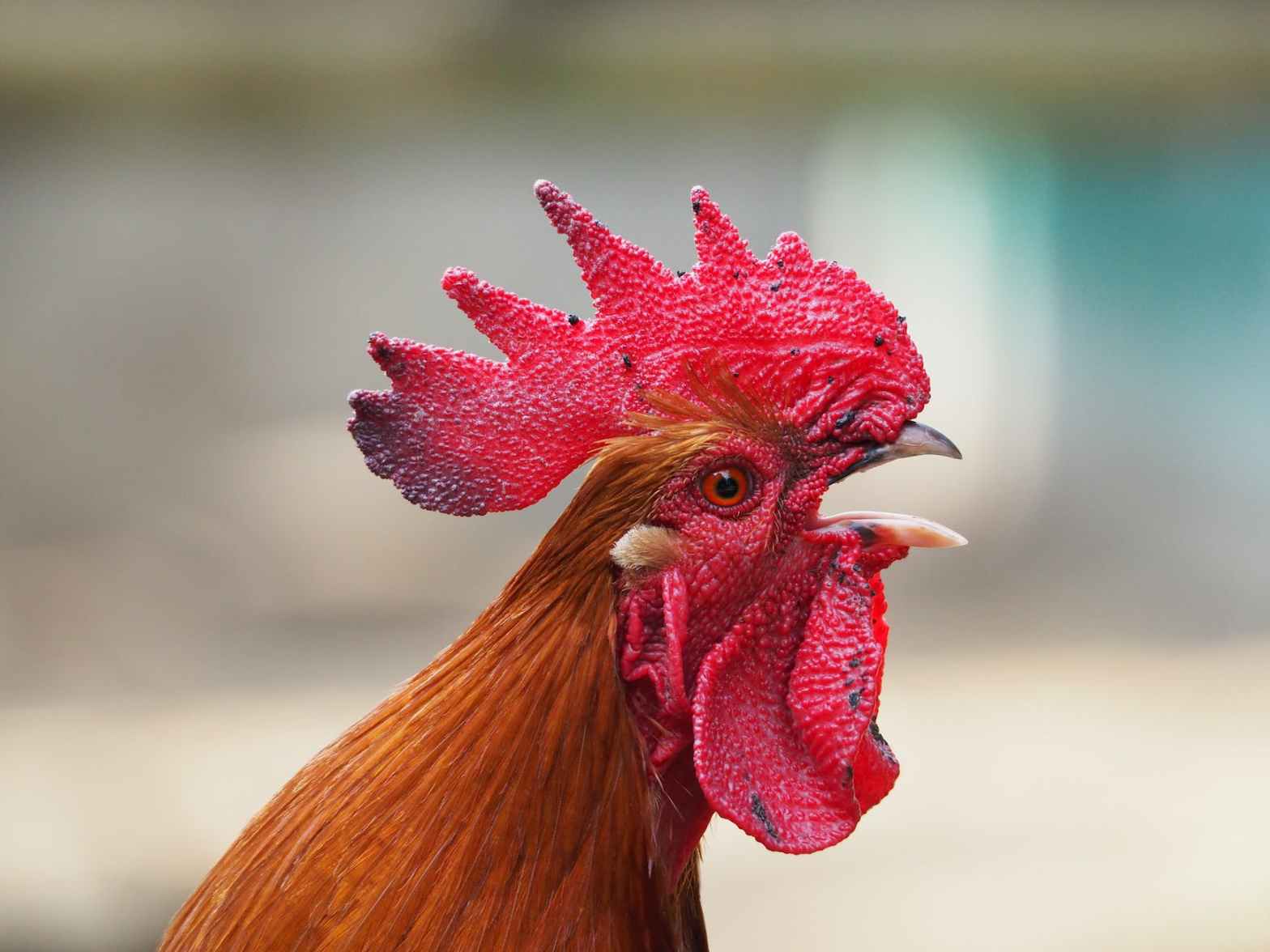
Does your flock need a rooster? Yes, and here’s why.

Keeping a rooster with your chicken flock is an important decision that can have a big impact on the overall health and productivity of your birds. While some people may choose to keep their flocks entirely female, there are several benefits to having at least one male in the mix.

One of the main roles of a rooster is to fertilize eggs. Without a rooster, your hens will not be able to produce offspring, limiting the growth of your flock. A rooster can also help to improve the fertility of your hens, as they will naturally be more inclined to lay eggs when they have a male present.

In addition to their role in reproduction, roosters can also serve as protectors for their flocks. Roosters are known for being territorial and will often defend their hens from potential predators. This can be especially important if you live in an area with a lot of wildlife that might pose a threat to your chickens.

Another benefit of having a rooster is that they can help to maintain order within the flock. Roosters will often establish a pecking order and will keep the other birds in line, reducing the risk of conflict and aggression within the group.

It’s worth noting that roosters can also be a bit more challenging to care for than hens. They can be more prone to aggression and may need more space to roam. It’s important to do your research and make sure that you are prepared to handle the unique needs of a rooster before bringing one into your flock.

Overall, the decision to keep a rooster with your chicken flock is one that should be carefully considered. While they do come with their own set of challenges, the benefits of having a male in the mix can make it well worth the effort. Roosters can help to fertilize eggs, protect their flocks, and maintain order within the group, making them an invaluable addition to any chicken farm.

The benefits of working with friends in the Amish community.

Working with farmers and other skilled tradespeople in the Amish community can offer numerous benefits for small family farms.

First and foremost, Amish farmers are known for their traditional, sustainable farming practices. They often use horse-drawn equipment, which can be more environmentally friendly and less disruptive to the land compared to modern machinery. Additionally, Amish farmers tend to rely on crop rotation, cover cropping, and natural fertilizers, which can improve soil health and reduce the need for chemical inputs. By collaborating with Amish farmers, small family farms can learn and adopt these sustainable practices to improve the long-term health and productivity of their own land.

Another benefit of working with Amish farmers is the opportunity to share resources and knowledge. Many Amish communities have a strong culture of mutual aid, in which individuals and families help each other with tasks such as farming, building, and childcare. This can be especially helpful for small family farms that may not have the resources or manpower to handle all aspects of farming on their own. By working with Amish farmers, small family farms can tap into a network of skilled and experienced individuals who can offer guidance and support.

In addition to farmers, the Amish community also has a tradition of skilled trades, such as carpentry, blacksmithing, and leatherworking. Collaborating with these tradespeople can provide small family farms with access to high-quality, handmade tools and equipment that may not be available elsewhere. This can be especially valuable for farms that prioritize traditional, artisanal techniques and products.

Finally, working with the Amish community can be a great way for small family farms to build relationships with like-minded individuals who share similar values and goals. Many Amish people prioritize a simple, self-sufficient lifestyle and strong connections to the land, which can align well with the goals of small family farms. By collaborating with Amish farmers and tradespeople, small family farms can forge lasting friendships and create a sense of community and support.

Overall, the benefits of working with farmers and other skilled tradespeople in the Amish community are numerous and diverse. From learning sustainable farming practices to sharing resources and knowledge, to gaining access to high-quality handmade tools, the opportunities for small family farms are vast. Collaborating with the Amish community can be a rewarding and enriching experience that helps small family farms thrive.

Affordable Farm-Fresh Egg Recipes for Any Occasion

As a small family farm that raises free-range chickens for eggs and uses raw milk as a staple in our diet, we understand the importance of being mindful of our budget while still being able to provide delicious, nourishing meals for our family. One of the benefits of raising our own food is that we have access to fresh, high-quality ingredients at a lower cost than purchasing them from a store.

One of our go-to meals is a simple frittata made with our farm-fresh eggs and any vegetables we have on hand. Frittatas are easy to make and can be customized to include whatever ingredients you have available. They’re also a great way to use up any odds and ends in the vegetable crisper.

To make a frittata, you will need:

  • 6-8 eggs
  • 1 cup of milk (we like to use raw milk from our own cows, but any milk will do)
  • 1 cup of diced vegetables (such as onions, bell peppers, tomatoes, and spinach)
  • 1/2 cup of shredded cheese (optional)
  • 1 tablespoon of butter or olive oil
  • Salt and pepper to taste

Instructions:

  1. Preheat your oven to 350°F.
  2. In a medium bowl, whisk together the eggs and milk.
  3. Heat a 10-inch oven-safe skillet over medium heat. Add the butter or oil and let it melt.
  4. Add the vegetables to the skillet and cook for 5-7 minutes, until they are tender.
  5. Pour the egg mixture over the vegetables and sprinkle with cheese, if using.
  6. Transfer the skillet to the oven and bake for 15-20 minutes, or until the frittata is set and the top is golden brown.
  7. Remove from the oven and let the frittata cool for a few minutes before slicing and serving.

This frittata is delicious on its own, but you can also serve it with a side of roasted potatoes or a simple green salad.

Another budget-friendly meal that we love is homemade mac and cheese using raw milk and our own farm-fresh eggs. This recipe is a little more time-intensive than the frittata, but it’s worth it for the creamy, comforting results.

To make mac and cheese, you will need:

  • 1 pound of elbow macaroni
  • 4 tablespoons of butter
  • 1/4 cup of all-purpose flour
  • 3 cups of milk (we recommend using raw milk for the creamiest texture)
  • 1 cup of shredded cheddar cheese
  • 2 egg yolks
  • Salt and pepper to taste

Instructions:

  1. Preheat your oven to 350°F.
  2. Bring a large pot of salted water to a boil and add the macaroni. Cook according to the package instructions until al dente.
  3. Drain the macaroni and set it aside.
  4. In a large saucepan, melt the butter over medium heat.
  5. Add the flour and whisk together to form a roux. Cook for 1-2 minutes, until the mixture starts to turn a light golden color.
  6. Slowly add the milk to the roux, whisking constantly to prevent lumps. Bring the mixture to a boil, then reduce the heat to low and simmer for 5-7 minutes, until the sauce has thickened.
  7. Remove the saucepan from the heat and stir in the shredded cheese until it is melted and smooth.
  8. In a small bowl, whisk together the egg yolks. Slowly add a small amount of the cheese sauce to the egg yolks, whisking constantly to temper the eggs. Pour the egg yolk mixture back into the cheese sauce and stir to combine.
  9. Add the cooked macaroni to the cheese sauce and stir to coat. Transfer the mac and cheese to a 9×13-inch baking dish.
  10. Bake the mac and cheese for 20-25 minutes, or until it is hot and bubbly.
  11. Serve the mac and cheese hot, garnished with a sprinkle of shredded cheese and a few cracks of black pepper.

There are other times when you need something a little simpler. 

Here are a few recipes that you can make with eggs and raw milk that don’t take long, and children also enjoy:

  1. Scrambled eggs: This is a simple, quick breakfast option. Crack a few eggs into a bowl and whisk them together with a splash of milk. Heat a nonstick skillet over medium heat and add a bit of butter. Pour the egg mixture into the skillet and cook, stirring occasionally, until the eggs are cooked to your desired doneness. Serve the scrambled eggs with toast or a side of fruit.
  2. French toast: This is a tasty breakfast or brunch option. Beat together a few eggs, a splash of milk, and a pinch of cinnamon. Dip slices of bread into the egg mixture, coating both sides. Heat a nonstick skillet over medium heat and add a bit of butter. Place the bread in the skillet and cook until both sides are golden brown. Serve the French toast with maple syrup, fresh berries, and a sprinkle of powdered sugar.
  3. Quiche: This is a great option for a light lunch or dinner. Preheat your oven to 350°F. Roll out a pie crust and place it in a pie dish. In a bowl, whisk together a few eggs and a cup of milk. Add in any desired fillings, such as diced vegetables, cooked meats, or shredded cheese. Pour the egg mixture over the fillings and bake the quiche for 30-35 minutes, or until the top is golden brown and the quiche is set.
  4. Omelette: This is another quick and easy breakfast option. Crack a few eggs into a bowl and whisk them together with a splash of milk. Heat a nonstick skillet over medium heat and add a bit of butter. Pour the egg mixture into the skillet and cook until the bottom is set. Add any desired fillings, such as diced vegetables, cooked meats, or shredded cheese. Fold the omelette in half and cook for an additional minute, until the filling is heated through.
  5. Pancakes: This is a classic breakfast option that kids love. In a bowl, whisk together 1 cup of flour, 1 cup of milk, 1 egg, 1 tablespoon of sugar, and 1 teaspoon of baking powder. Heat a griddle or large skillet over medium heat and lightly coat it with cooking spray or butter. Pour the pancake batter onto the griddle in small circles and cook until bubbles form on the surface. Flip the pancakes and cook until both sides are golden brown. Serve the pancakes with syrup, fresh berries, and a sprinkle of powdered sugar.

Preserve eggs with water and lime to save money during the winter.

Chickens have a natural laying cycle that is influenced by the amount of daylight they receive. In the spring and summer months, when there is more daylight, chickens will typically lay more eggs. In the fall and winter months, when the days are shorter, chickens will lay fewer eggs.

There are several reasons for this. One is that the shorter days signal to the chicken’s body that it is time to start preparing for the breeding season, which typically occurs in the spring. This means that the chicken’s body will naturally produce fewer eggs during the winter months.

Another reason is that the colder temperatures and shorter days can also affect a chicken’s metabolism, causing it to slow down and produce fewer eggs. Additionally, the lack of access to fresh greens and insects during the winter can also contribute to a decrease in egg production.

It’s important to note that every chicken is different and may have slightly different laying patterns. Some chickens may continue to lay eggs consistently throughout the year, while others may take a break from laying entirely during the winter months.

While working a small farm and parenting three young girls, we are always looking for ways to preserve our resources and stretch our budget. One method that has proven particularly useful for us is preserving eggs using water and lime.

The process is relatively simple and can be done with just a few supplies. First, gather your fresh eggs and a bucket or container large enough to hold them. Next, mix together water and lime in a ratio of about 1 part lime to 2 parts water. You want the mixture to be slightly paste-like in consistency.

Carefully place the eggs in the mixture, making sure they are fully submerged. The lime mixture will help to preserve the eggs by preventing bacteria from growing and causing them to spoil.

We like to use this method to preserve our excess eggs that we don’t think we’ll be able to sell or eat. It’s a great way to extend their shelf life and make sure nothing goes to waste.

To use the preserved eggs, simply remove them from the lime mixture and give them a thorough rinse under cold water. They may have a slightly chalky texture due to the lime, but this will disappear once they are cooked.

Preserving eggs using water and lime is a simple and effective way to extend their shelf life and make the most of your resources. Give it a try on your farm or homestead and see the benefits for yourself.

Why we let our chickens roam

As a small family farmer, I have seen firsthand the difference that letting chickens roam free can make for their health and well-being. On my farm, I allow my chickens to roam freely in the pasture, where they can forage for insects and seeds, scratch and peck at the ground, and engage in other natural behaviors.

In contrast, chickens on factory farms are often confined to small, cramped spaces, where they are unable to engage in these natural behaviors. This can lead to a number of health problems, such as weakened immune systems, respiratory issues, and even cannibalism.

Allowing chickens to roam free not only helps to prevent these health issues, but it also leads to a happier and more productive flock. Chickens that are able to engage in natural behaviors are more likely to lay eggs, and the eggs they produce are often of higher quality due to their diet of natural forage.

In addition to the benefits for the chickens themselves, letting chickens roam free also has benefits for the environment. Pastured chickens are able to fertilize the soil and control pests, which can help to improve soil health and reduce the need for chemical pesticides.

Overall, there are many benefits to letting chickens roam free, both for the birds themselves and for the environment. As a small family farmer, I am proud to be able to provide my chickens with the opportunity to live a healthy and natural life.